Boiler Repair in Morningside Heights, Manhattan
Loss of heat during freezing Manhattan winters disrupts tenant comfort and creates freeze-up risks for building plumbing lines. We provide comprehensive diagnostic troubleshooting, safety switch testing, burner calibration, and leak repairs for steam and hot-water boilers across Morningside Heights and Upper Manhattan.
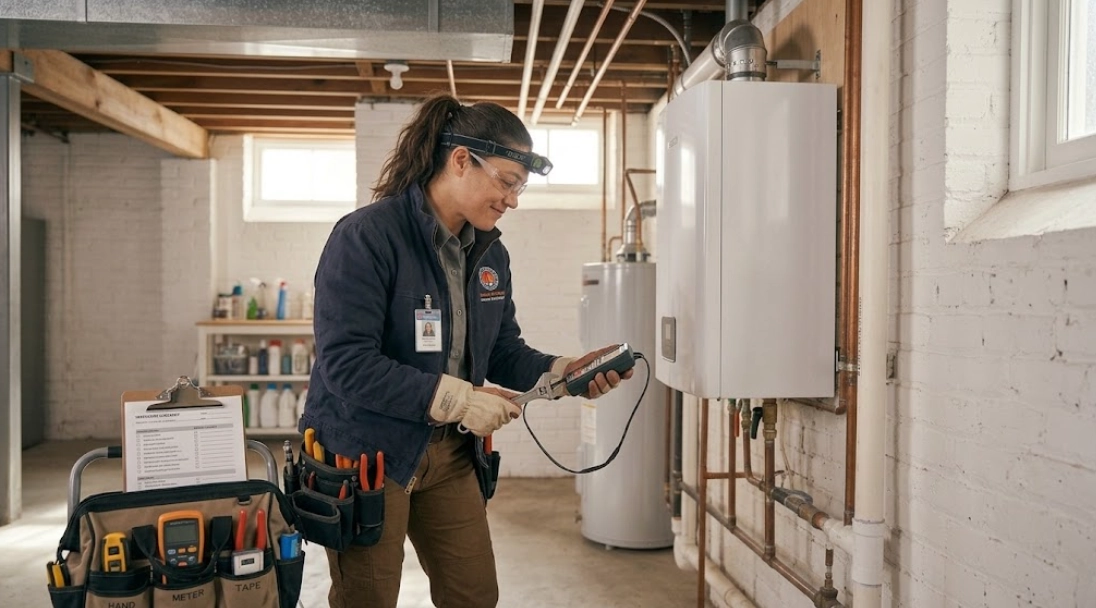
Expert Heating Diagnostics for Manhattan Residential Properties
Heating infrastructure in Morningside Heights spans classic brownstone walk-ups, pre-war co-ops near West 116th Street, and modern institutional housing. Most multi-unit residential properties rely on centralized commercial cast-iron or steel boilers located in basement mechanical vaults, delivering low-pressure steam heat or forced hydronic hot water throughout extensive vertical piping stacks.
Delivering reliable boiler repair Morningside Heights Manhattan property managers and building owners depend on starts with identifying the exact heating medium. Troubleshooting steam systems requires evaluating low-water cutoffs, automatic water feeders, and header vents, while hydronic hot water boilers require inspecting expansion tanks, zone circulator relays, and pressure reducing valves.
Warning Signs Your Boiler Requires Immediate Service
Recognizing early mechanical faults prevents total heating outages during freezing weather.
Complete Loss of Heat
When radiators go cold across the building, burner lockout, blown control transformers, tripped low-water cutoffs, or gas valve failures require immediate diagnosis.
Pressure Relief Valve Weeping
Water discharging from the 15-PSI steam or 30-PSI hydronic relief valve indicates excessive system pressure, failed expansion controls, or internal control malfunction.
Loud Banging & Rattling
Kettle-boiling sounds inside the boiler block indicate mineral scale accumulation, while violent pipe banging in risers indicates trapped condensate water hammer.
Key Mechanical Components & Failure Modes
Understanding critical safety controls on Manhattan heating equipment.
Low-Water Cutoff (LWCO) Controls
The most critical safety control on any boiler. Float chambers and probe sensors monitor water levels constantly. If sediment clogs the chamber or an electronic probe shorts, the burner shuts down to prevent dangerous dry-fire heat exchanger cracking.
Pressuretrols & Aquastat Regulators
Steam boilers rely on a Pressuretrol to cut the burner off at safe low operating pressures (0.5 to 2.0 PSI). Hydronic boilers utilize aquastats to modulate water temperature. Miscalibration leads to overheating, fuel waste, and safety trips.
Gas Burners & Ignition Modules
Dirty pilot burners, oxidized flame rectification rods, and faulty electronic ignition modules prevent smooth burner staging. We coordinate gas burner servicing with our gas line repair protocols to ensure clean, draft-compliant combustion.
Circulator Pumps & Zone Relays
In hot water hydronic systems, burned-out circulator pump cartridges or stuck zone valves prevent heated water from reaching living spaces, causing localized cold zones despite normal boiler water temperature.
Our Methodical Boiler Diagnostic Workflow
Comprehensive electrical, mechanical, and combustion safety analysis.
Safety & Electrical Inspection
We test line and low-voltage electrical controls, check emergency burner cutoffs, and verify safety limit switch continuity.
Water Level & Pressure Check
We blow down gauge glasses, test automatic feed valves, inspect expansion tanks, and confirm static operating pressures.
Combustion & Draft Testing
We inspect gas burner manifolds, clean flame sensors, verify chimney draft, and inspect flue breeching for carbon monoxide safety.
Operational Firing Cycle
We observe a full live firing cycle, verify proper safety shutoff thresholds, and assess heat delivery across building risers.
Multi-Unit Properties vs. Individual Heating Systems
In Manhattan co-op and condominium buildings, central boilers heat the entire property under the jurisdiction of building management. Individual apartment residents do not have direct access to boiler controls. If you are an individual tenant experiencing cold radiators:
- Check your radiator shutoff valves: Ensure the manual supply valve is 100% fully open. On one-pipe steam systems, half-closed valves cause water hammer and block steam.
- Inspect the air vent: If the radiator is cold while others in your apartment are hot, the radiator air vent may be clogged with paint or mineral scale.
- Notify your building superintendent: If heat is out across the entire line of apartments, your resident manager can contact our commercial heating dispatch directly.
Frequently Asked Questions About Boiler Repair
Common questions from Morningside Heights building owners and property managers.
What is the critical difference between steam and hydronic boiler systems in Manhattan?
Steam boilers boil water to create low-pressure steam (typically 0.5 to 2.0 PSI) that naturally rises to cast-iron radiators, relying on gravity and air vents to circulate heat. Hydronic systems keep the entire boiler and piping loop completely filled with pressurized water (typically 12 to 20 PSI), utilizing electric circulator pumps to move hot water through baseboards or radiant loops.
Why is my building boiler losing water or requiring constant fresh water additions?
In a steam heating system, rapid water loss points to leaking buried return lines, failing radiator air vents, leaking valve packing nuts, or an internal heat exchanger crack. In a closed hydronic system, pressure loss indicates a weeping pressure relief valve, waterlogged expansion tank, or hidden pipe leak along heating risers.
How does a low-water cutoff protect a boiler from catastrophic failure?
A low-water cutoff is an essential safety device that immediately cuts electrical power to the gas or oil burner if water in the boiler drops below a safe operational level. Without this safety cutoff, dry firing causes the cast-iron heat exchanger sections to warp, crack, melt, or trigger a severe fire hazard.
Can individual apartment tenants adjust their building's central boiler controls?
No. In multi-family Manhattan co-ops and apartment buildings, central heating boilers are managed by licensed building superintendents or heating contractors under NYC Housing Maintenance Code requirements. If your individual apartment has cold radiators, the issue typically stems from a stuck radiator valve or failed air vent rather than central boiler controls.
Related Mechanical & Plumbing Services
Complete heating and plumbing solutions across Morningside Heights.
Water Heater Repair
Diagnostic testing and repair for domestic hot water tanks and indirect heating coils operating alongside central boilers.
Gas Line Repair & Inspection
Code-compliant gas piping testing, shutoff valves, and burner supply line maintenance adhering to NYC standards.
Leak Detection
Trace hidden steam condensate leaks and hydronic line losses behind finished plaster walls and parquet floors.
Learn more about our service territory on our Service Areas overview.